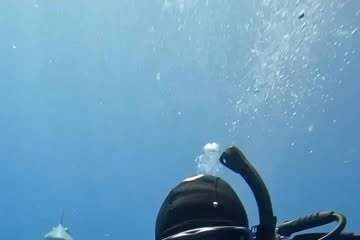
The short answer. Florida has three distinct dive seasons and coasts. The Gulf coast (Venice, Sarasota, Tampa, Naples) is warmest and clearest from May through September, with 75–85°F water and 10–20 feet of visibility; winter drops into the 60s and visibility narrows. The Atlantic coast (Fort Lauderdale, Palm Beach, Miami, Jacksonville) is tempered by the Gulf Stream and stays diveable all year, roughly 72–80°F. Freshwater springs hold a constant 72°F regardless of season, which makes them the reliable winter and bad-weather option.
The short version
- Easiest diving of the year: late April to mid June, and October. Warm water, calm mornings, manageable air temperatures on the surface.
- Warmest water: June through September — 84–88°F on the Gulf, meaning no wetsuit for most people on shallow dives. It is also the storm season.
- Best visibility on the Gulf: spring and early summer, plus cold, clear winter days when the algae and plankton are quiet.
- Most reliable year-round: the Atlantic coast, kept warm and generally clearer by the Gulf Stream.
- Weatherproof backup: the springs. Constant 72°F, no swell, no storms, gin-clear.
- To avoid if you can: late August through October on the Gulf — peak red tide window and peak hurricane-season risk.
Gulf coast: Venice, Sarasota, Tampa Bay, Fort Myers, Naples
This is Kaitlyn’s home water, and it is a shallow, sandy, fossil-rich shelf rather than coral reef. Conditions run in a clear annual cycle:
- January–February: the coldest water of the year, mid-50s to mid-60s°F. A 5mm wetsuit or better, hood and gloves for longer dives. Visibility is often decent-to-good because there is little algae growing, and the beach crowd is gone.
- March–April: water climbs into the low 70s. Air temperatures are pleasant, winds are the main scheduling risk.
- May–September: the classic window. Surface water 75–86°F, visibility commonly 10–20 feet on the fossil grounds, and long comfortable dives in a rash guard. This is also when afternoon thunderstorms brew, so mornings win.
- October–November: warm water lingers around 78–80°F into October with lower humidity — arguably the best combination of the whole year, until the first cold fronts arrive in November and pull water into the low 70s.
- December: cooling fast, mid-to-high 60s, and the run of good-weather days narrows.
Gulf visibility is honest at 10–25 feet in good conditions and can fall to under five when wind stirs the sand or a bloom rolls in. It is not the Caribbean. What it does have is the fossil beds: shark teeth and megalodon teeth lying on the bottom 20–25 feet down, a beach dive in several spots and a short boat ride to the Bone Pit area a quarter mile offshore.
Atlantic coast: Jacksonville, Daytona, Palm Beach, Fort Lauderdale, Miami
The east coast behaves like a different state. The Gulf Stream runs close to shore from Palm Beach south, holding water in the upper 70s to low 80s even in January, with far better visibility than the Gulf — often 30–80 feet on a good day. The trade is current: drift diving is the norm in places, and it is not a beginner’s first environment.
- Winter (December–March): still diveable — 70–75°F in the south, colder toward Jacksonville. This is the season that makes the Atlantic a year-round option.
- Late spring–summer: 80–86°F, warmest and busiest, with the same afternoon-storm pattern as the Gulf.
- Fall: water stays warm into November, and the big animals (rays, turtles, the occasional hammerhead migration) move through as things cool.
- Wrecks and reefs: Broward and Miami count hundreds of artificial reefs and sunken wrecks, many inside 70 feet. Excellent advanced diving, and a different kind of course environment than the Gulf shelf.
Freshwater springs: the year-round answer
Florida’s springs are fed from the Floridan aquifer and emerge at a near-constant 72°F regardless of the season, because the water comes from depth rather than from the sun. That single fact solves most scheduling problems:
- In winter the springs are warmer than the Gulf — which is exactly why manatees gather in them, and exactly why a 72°F dive in January feels inviting.
- In summer they are the cool escape, and visibility stays clear when ocean wind has flattened the Gulf.
- They are close to home: Warm Mineral Springs sits in North Port, south of Venice in Sarasota County — and the state’s spring country is a day trip from most of the Gulf coast.
- No swell, no surge, no boat required — a forgiving environment for confined-water training and for first open water dives.
The two things that actually cancel dives
Hurricane season runs 1 June to 30 November, with the statistical peak from mid-August to mid-October. Most days in that window are perfectly fine — but the forecast matters more than it does in spring, and building a spare day into a certification course is cheap insurance against a rebooking fee.
Red tide is a harmful algal bloom (Karenia brevis) that most often develops on the Gulf coast in late summer and early autumn, sometimes persisting into winter and spring. It kills fish, irritates airways, and shuts down beach and inshore diving when it is dense. It is patchy rather than statewide: it can be bad in one county and clear in the next, and it does not affect the springs or the Atlantic in the same way. Check the state’s current conditions before you commit to dates rather than cancelling a whole season — and remember it also means those weeks are often the cheapest and least crowded on the water.
Choosing your month for the thing you are actually doing
“Best” depends on the goal:
- Certification or a first dive: aim for warm, shallow and flat — May, June, September or October on the Gulf. Warm water makes equalising easier and keeps the day about skills instead of cold. When the ocean refuses, the springs are the fallback.
- Shark tooth and fossil dives: the fossil grounds are shallow year-round; spring through autumn is simply more comfortable. Visibility is the real variable, and it changes week to week rather than season to season.
- Refresher diving: any warm month, but give yourself a day before a bigger trip rather than stacking it onto the morning of one.
- Atlantic wreck diving: winter into spring for the clearest water and smallest crowds.
- Cheap, quiet water: the shoulder weeks — mid-September and the first half of December — when the summer crowds have gone and the cold fronts have not fully arrived.
Any month of the year is diveable somewhere in Florida if you are willing to move coast to coast, which is one advantage of an instructor who travels: see where Kaitlyn teaches, or send your dates and she will tell you which coast suits them.
Questions about your own situation?
Tell Kaitlyn where you are, how many divers, and what you have dived before. She answers personally — and tells you honestly if a course elsewhere suits you better.