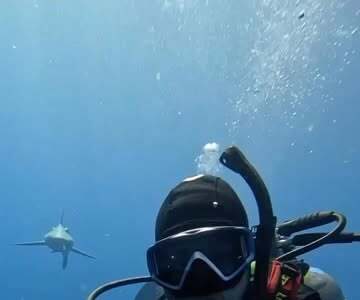
The short answer. Your certification never expires, but the skills behind it fade with time out of the water. A refresher course is a skills review with an instructor — gear assembly, mask and regulator drills, buoyancy, emergency procedures — usually a session in a pool plus a supervised shallow open water dive. The common rule of thumb is to refresh after six months to a year of no diving, or any time assembling your gear feels unfamiliar. It takes hours, not days, and nothing about your certification is lost or replaced.
The honest rule of thumb
There is no legal expiry date on a certification card. There is a practical one, and it is shorter than people assume.
- Six months or more out of the water — muscle memory is the first thing to go. Buoyancy control, which is entirely automatic when you dive regularly, is the skill that comes back slowest.
- A year or more — most dive operators and liveaboards will ask for a refresher or a supervised check-out dive before taking you out, even if your card is perfectly valid. Some will simply refuse without one.
- The real test: can you assemble your own regulator and BC without guessing, and do you remember how you would react to a lost regulator? If either answer makes you pause, book the refresher. That is the whole point of it — nobody is judging the five-year gap, they are preventing the panic at 60 feet.
What a refresher actually covers
A good refresher is not a lecture. It is hands-on from the first minute, and it deliberately revisits the skills that fail silently when you are rusty:
- Gear assembly and pre-dive checks — building your own set from scratch, and the buddy check that catches a closed valve before it becomes a real problem.
- Mask clearing and regulator recovery — the two skills that decide whether a flooded mask ends your dive or costs you ten seconds.
- Buoyancy and trim — weighting, breathing control, and hovering instead of kneeling. Usually the longest part of the session, and the reason most returning divers feel clumsy.
- Dive planning and computers — no-decompression limits, safety stops, and how the computer you will actually wear behaves. Dive planning has moved on since your course if it was a while ago.
- Emergency procedures — out-of-air response, controlled emergency swimming ascent, and what to do about a cramp or a current you did not expect.
- A supervised open water dive — the payoff. Once skills are reviewed in shallow water, the dive is a real one, with an instructor alongside until you stop thinking about the mechanics.
Refresher or repeat the full course?
Almost never the full course. A refresher is a review: you keep your certification, your card, your logged dives, and your agency record. You skip knowledge development, the final exam and the full four-dive certification sequence, because you already passed them.
The exception is a genuinely long gap combined with lost confidence — ten years, say, and some anxiety about getting back in. Even then, the fix is usually a refresher followed by a few guided dives, not a second certification course. If an operator tells you that your certification is void without looking at anything, get a second opinion.
Two adjacent things are also worth knowing about, because they come up in the same conversation:
- Re-activation programs — agencies (PADI’s ReActivate, and NAUI’s equivalent refresher training) package an online knowledge review with an in-water skills session, and update your certification date. Useful if you want the paper trail as well as the skills.
- Specialty continuations — returning divers often skip straight to something that re-motivates them: a buoyancy/peak performance course, a night dive, or a fossil dive. Skills come back faster when there is something to look forward to at the bottom.
Doing it in Florida, before a bigger trip
The most common reason people book a refresher with Kaitlyn is that something else is already booked — a Keys trip, a Cozumel flight, a liveaboard — and it dawned on them that the last dive was three years ago.
That works well here, and it is one of the few things that can be done properly in a single day: a pool or shallow-water skills session plus a supervised Gulf or spring dive. If your trip is elsewhere, the smart move is to get the refresher done close to home on warm, shallow, forgiving water rather than spending the first day of an expensive vacation relearning your own equipment. Kaitlyn travels across Florida for this — see where she teaches.
What to bring, and what to expect to spend
Bring your certification card (a photo on your phone is fine), your logbook if you have kept one, and any personal gear you own. Gear rental is normally included in a refresher course — but if you have your own mask and computer, use them, because the point is to get comfortable with your real equipment.
Costs vary with whether a boat is involved and how much attention you need, so it is quoted per diver rather than published. Tell Kaitlyn your last dive date, what you have dived before, and what you are planning next: send your dates.
Questions about your own situation?
Tell Kaitlyn where you are, how many divers, and what you have dived before. She answers personally — and tells you honestly if a course elsewhere suits you better.